


Layer-0 vs Layer-1 vs Layer-2: The Complete Comparison Guide
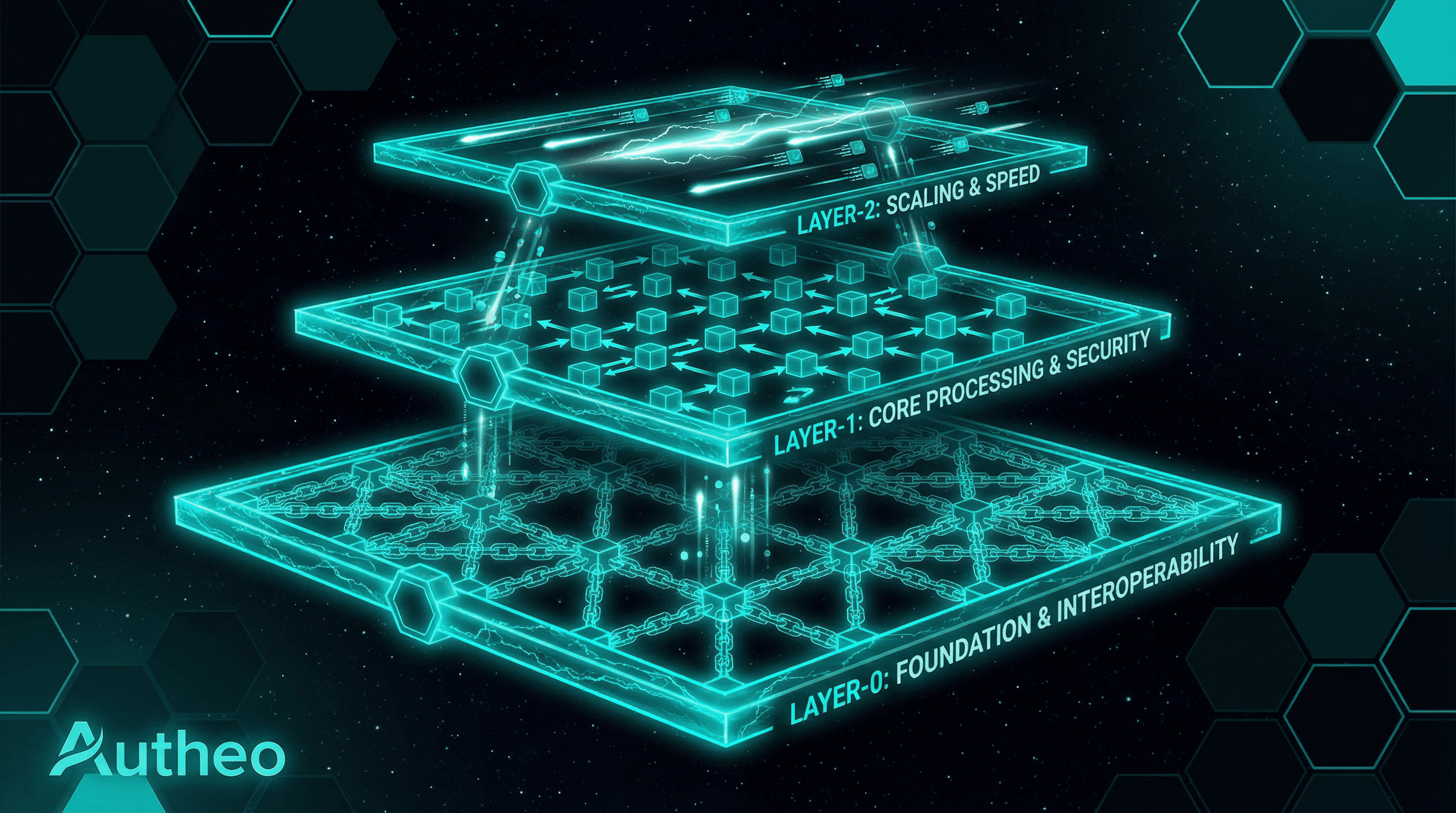
Layer-0, Layer-1, and Layer-2 describe distinct levels of the blockchain technology stack, each solving different problems: Layer-0 provides the interoperability and coordination infrastructure beneath multiple blockchains; Layer-1 is the core blockchain where transactions are executed and settled; and Layer-2 sits on top of Layer-1 to increase throughput and reduce costs while inheriting Layer-1's security. Understanding which layer serves your use case is one of the most important architectural decisions in Web3 development.
Loading tweet...
Layer-0: The Foundation for Interoperability
Layer-0 is the base coordination infrastructure, the TCP/IP of the blockchain world. It doesn't run dApps or store user transactions directly. Instead, it provides the protocols, communication standards, and sometimes shared security that enable multiple independent Layer-1 blockchains to communicate, exchange value, and coordinate.
Leading Layer-0 protocols each take a different approach. Polkadot uses a Relay Chain to coordinate consensus and cross-chain messaging for connected parachains, offering shared security with 12-60 second finality. Cosmos uses the Inter-Blockchain Communication (IBC) protocol to connect sovereign chains, achieving 1-3 second finality via Tendermint BFT while letting each zone maintain its own security model. Avalanche achieves 1-2 second finality through its custom consensus protocol with customizable subnets for specialized applications.
Autheo goes a step further by building a Layer-0 Operating System with an integrated Layer-1, combining the interoperability capabilities of a Layer-0 with the execution environment of a Layer-1 and adding native AI, compute, storage, and identity into a single unified platform.
Layer-1: The Core Execution Layer
Layer-1 is the base blockchain protocol itself, the chain where consensus happens, transactions are finalized, and the canonical state of the network is maintained. Examples include Bitcoin, Ethereum, Solana, and Avalanche's primary C-Chain. Layer-1 is where smart contracts live, where assets have ultimate settlement finality, and where the core security model is enforced.
Layer-1 chains face the 'blockchain trilemma': no chain can simultaneously maximize decentralization, security, and scalability. Bitcoin prioritizes decentralization and security at the cost of throughput (7 TPS). Ethereum prioritizes security and decentralization (post-Merge) but struggles with congestion during peak demand. Solana prioritizes speed (65,000+ TPS) with different tradeoffs in decentralization.
The right Layer-1 depends on your requirements. DeFi protocols that need the deepest liquidity and most audited infrastructure gravitate toward Ethereum. Applications needing high throughput at low cost often choose Solana or Avalanche. Projects needing EVM compatibility with lower fees typically use Polygon, Arbitrum, or Optimism as Layer-2s built on Ethereum.
Layer-2: Scaling Solutions
Layer-2 solutions sit on top of Layer-1 blockchains to address their scalability limitations, while inheriting their security guarantees. The key mechanism: transactions are processed off-chain in batches, then periodic commitments (proofs or data) are posted back to the Layer-1 for final settlement.
Rollups are the dominant Layer-2 architecture in 2026. Optimistic Rollups (Arbitrum, Optimism) assume transactions are valid by default and use fraud proofs to catch errors. ZK Rollups (zkSync, StarkNet, Polygon zkEVM) use zero-knowledge proofs to mathematically verify transaction validity, offering faster finality. Both dramatically reduce Layer-1 costs, by 10-100x in many cases, while preserving Ethereum's security guarantees.
The Lightning Network (Bitcoin) takes a different approach using payment channels, opening bilateral payment channels off-chain and settling only the net result on Bitcoin's main chain. This enables near-instant micropayments at negligible cost, but requires channel management and is less general-purpose than rollups.
How the Layers Work Together
In a typical multi-layer architecture, Layer-0 connects the ecosystems, Layer-1 handles consensus and final settlement, Layer-2 provides scalable execution, and a Layer-3 application layer (dApps and user interfaces) handles the user-facing experience. A DeFi app might have its UI on a Layer-3 interface, its smart contracts running on a Layer-2 rollup, which settles on Ethereum (Layer-1), which is connected to other ecosystems via a Layer-0 protocol like Cosmos IBC.
This isn't abstract, the same trade transaction on a user's screen might involve four distinct technical layers all working in concert. Understanding where each concern lives helps developers make informed decisions about where to deploy, what security assumptions they're making, and what tradeoffs they're accepting.
Choosing the Right Layer for Your Project
Build on Layer-0 (or a platform like Autheo) if: you're building cross-chain infrastructure, you need to launch a sovereign application-specific chain, or you need the interoperability primitives to connect multiple ecosystems without being locked into one.
Build on Layer-1 if: you need maximum security for high-value asset custody, you're building where the deepest existing liquidity lives (Ethereum DeFi), or you need the security guarantees of the root settlement layer.
Build on Layer-2 if: you need Ethereum-level security but can't afford Ethereum L1 fees, you're building consumer applications that require fast, cheap transactions, or you're scaling an existing Ethereum application.
Key Takeaways
- Layer-0 provides interoperability and coordination infrastructure for multiple Layer-1 chains, the TCP/IP of blockchain.
- Layer-1 is the core blockchain: transaction execution, final settlement, smart contracts, and the ultimate security anchor.
- Layer-2 scales Layer-1 by processing transactions off-chain and posting proofs or commitments back for settlement, reducing costs by 10-100x.
- Layer-0 finality speeds vary: Polkadot (12-60s), Cosmos (1-3s), Avalanche (1-2s), with different security and sovereignty tradeoffs.
- Autheo uniquely combines Layer-0 and Layer-1 in a single platform, adding AI, compute, storage, and identity to create a full Web3 Operating System.
- The right layer depends on your requirements: cross-chain connectivity (L0), maximum security (L1), or scalable throughput (L2).
Build across the full blockchain stack with Autheo's unified Layer-0 OS. Start at autheo.com or access developer documentation at docs.autheo.com.
Gear Up with Autheo
Rep the network. Official merch from the Autheo Store.


Theo Nova
The editorial voice of Autheo
Research-driven coverage of Layer-0 infrastructure, decentralized AI, and the integration era of Web3. Written and reviewed by the Autheo content and engineering teams.
About this author →Get the Autheo Daily
Blockchain insights, AI trends, and Web3 infrastructure updates delivered to your inbox every morning.